Retail environments are often designed under the assumption that customers arrive with intention. In reality, a large share of retail decisions are unplanned, shaped by visibility, timing, and ease of access. This is where GYGY Mentis in Noida operates from a distinctly different logic. Rather than positioning itself as a destination that must be sought out, the project appears structured to intersect with existing movement, allowing retail activity to emerge organically.
This distinction matters because impulse-based retail follows a different economic pattern than destination retail. It depends less on planning and more on interruption.
Impulse retail is triggered mid-journey. Consumers notice, pause, engage, and decide—often within seconds. For this to work, retail environments must reduce effort to near zero. Visibility must be immediate. Entry must feel effortless. Navigation must be intuitive.
A GYGY Mentis retail shop benefits from this structure because it does not rely on customers arriving with pre-formed intent. Instead, it captures attention while people are already moving through the area. This lowers the psychological threshold for engagement, which is critical in high-frequency, low-effort consumption.
Rather than functioning as a retail endpoint, GYGY Mentis in Noida behaves like a flow intercept. It positions retail along predictable daily routes—commutes, errands, and short-distance travel—allowing commerce to attach itself to routine movement.
This approach reduces dependency on promotional pull. When people encounter retail naturally, repeated exposure replaces persuasion. Over time, familiarity becomes a stronger driver than advertising.
Impulse-oriented retail spaces typically host short visits. Customers enter briefly, transact quickly, and leave. While individual ticket sizes may be modest, frequency compensates. This model favors consistency over spikes.
A GYGY Mentis retail shop is well-suited to such behavior. The environment supports rapid engagement without requiring prolonged browsing. This benefits categories such as food, convenience retail, personal services, and everyday lifestyle offerings.
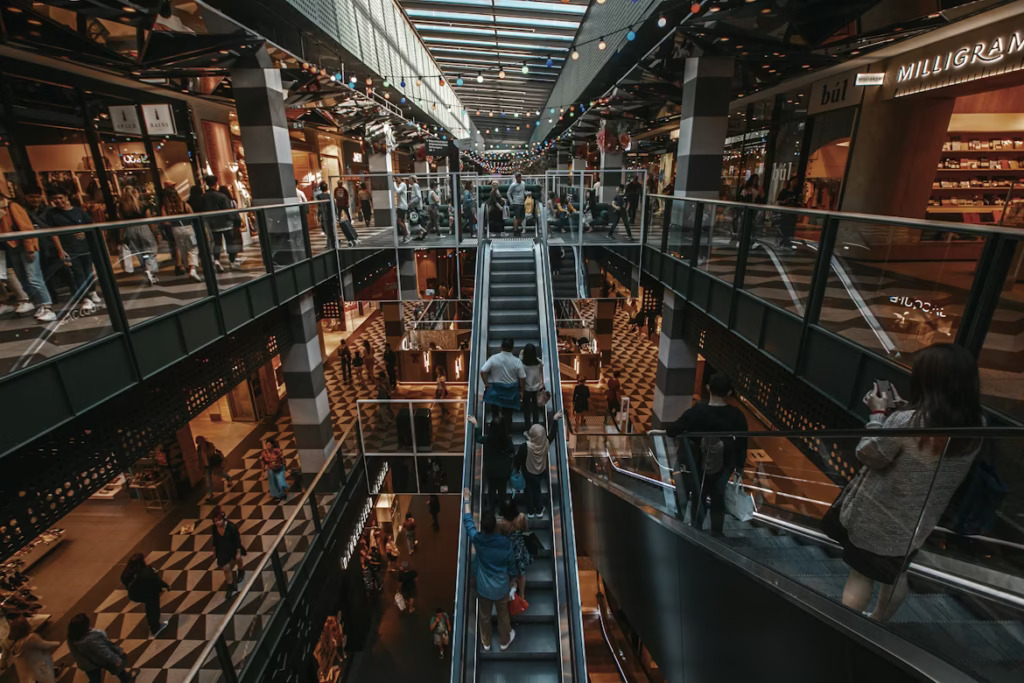
Another advantage of impulse-driven retail environments is rapid feedback. Retailers quickly observe what attracts attention, what converts, and what does not. Adjustments happen faster because customer response is immediate and visible.
This adaptability strengthens the overall retail ecosystem. Instead of locking into rigid formats, tenant mixes can evolve based on real behavior rather than projections. Over time, this flexibility improves occupancy resilience.
Impulse-led retail spreads demand across many small decisions rather than a few large ones. This reduces exposure to seasonal fluctuations or destination fatigue. When retail performance is supported by everyday movement, downturns tend to soften rather than collapse.
For investors and operators, this distribution of risk is valuable. It creates steadier engagement patterns and reduces reliance on peak-driven footfall.
The structure of GYGY Mentis in Noida suggests an understanding that retail does not need to be oversized to be effective. Developed by GYGY Group, the project appears focused on exposure efficiency rather than visual dominance.
This planning philosophy aligns with how modern retail increasingly performs—through repetition, familiarity, and ease rather than spectacle.
GYGY Mentis demonstrates that retail success can be engineered through interruption rather than intention. By placing retail within the path of daily life, GYGY Mentis in Noida allows commerce to happen without persuasion.
In environments where attention is fragmented and time is limited, a well-positioned GYGY Mentis retail shop benefits from being encountered naturally. That quiet integration into routine movement is often what sustains retail performance long after novelty fades.