There’s a certain temptation with large commercial projects.
The height, the numbers, the size of the land—they become the headline. And for a moment, that works. It catches attention. It creates curiosity. But once that initial layer fades, something more important takes over.
How does the place actually function?
That’s the question spaces like Cyberthum quietly answer.
It isn’t just built to look expansive. It’s built to handle movement at scale—without letting it feel overwhelming. And that’s a very different challenge altogether.
Located in Sector 140A along the Noida Expressway, the project sits in one of those zones where business activity isn’t sporadic—it’s continuous. Offices, tech parks, residential clusters—all feeding into a daily cycle of people moving in and out.
When a development is placed inside that kind of rhythm, it doesn’t need to create demand artificially. It simply channels what already exists.
And that’s where Cyberthum Bhutani starts to feel more grounded than exaggerated.
Spread across a massive land parcel, with twin towers rising prominently, the project introduces a vertical way of experiencing commercial space.
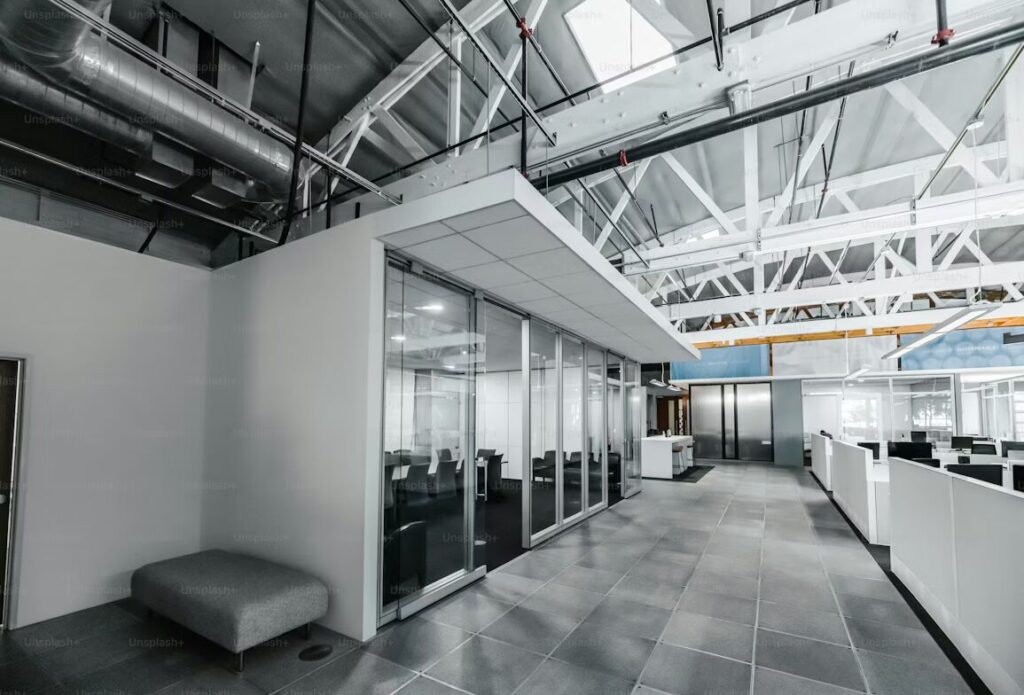
But what’s interesting isn’t just the height—it’s how that height is used.
Instead of repeating the same structure floor after floor, the idea leans toward segmentation. Different zones serve different purposes—offices, retail, food, leisure—all layered within the same ecosystem. That layering creates a kind of internal circulation where people don’t just arrive and leave—they move within the space.
And movement is what keeps a commercial environment alive.
One of the more distinct elements here is the idea of a vertical campus. It reflects how the space is intended to function. Work doesn’t stay confined to one level. Breaks, meetings, downtime—they all spill into different parts of the structure without disconnecting from the environment.
That continuity changes how time is spent inside the project.
You’re not constantly exiting the system to find what you need. It’s already within reach.
The retail and leisure components add another layer to this.
Shops, dining zones, entertainment spaces—they aren’t placed as afterthoughts. They’re integrated into the flow. So someone working in the building contributes to retail movement. Someone visiting for retail becomes part of the overall footfall.
It creates overlap.
And overlap is what most successful commercial spaces depend on.
Another aspect that often goes unnoticed is how infrastructure supports all of this. High-speed elevators, large parking capacity, and efficient circulation systems aren’t just features—they’re necessary when you’re dealing with vertical density.
Without that support, scale becomes a problem instead of an advantage.
Here, it feels accounted for.
From an investment perspective, the project doesn’t position itself as a short-term opportunity. It leans more toward long-term absorption. With consistent office occupancy and layered retail interaction, the value builds through usage rather than speculation.
That tends to be more stable over time.
What makes Cyberthum stand apart isn’t just that it’s large.
It’s that it understands what to do with that largeness.
Because in commercial real estate, size alone doesn’t create impact.
What matters is whether that space can keep people moving, engaging, and returning—without needing constant effort.
And when that happens, the project stops feeling like a structure.
It starts functioning like a system.