Noida’s commercial evolution is no longer speculative — it is infrastructural. The city has moved past its early expansion phase and is now consolidating into a corridor-based economic system. In this phase, the relevance of commercial projects depends less on surface aesthetics and more on strategic embedding within mobility networks, corporate decentralization patterns, and long-term tenant adaptability.
Among established real estate developers in Noida, the distinction increasingly lies in whether a developer approaches commercial construction as a vertical extension of residential logic or as an independent discipline requiring its own analytical framework. Commercial infrastructure demands a different vocabulary — one shaped by exposure bandwidth, vertical transit calibration, parking mathematics, and brand-facing frontage geometry.
Group 108 operates within this specialized commercial discipline. Rather than dispersing resources across unrelated asset categories, the developer’s concentration within retail and office ecosystems suggests a strategic narrowing of focus. In commercial development, focus often translates into structural clarity. Repetition within a single asset class refines execution patterns and reduces design volatility.
A central illustration of this approach is ONE FNG by Group 108. Positioned at a junction connecting Noida with Faridabad and Ghaziabad, the development leverages directional convergence rather than relying on passive location advantage. Commercial sustainability improves when projects draw from overlapping commuter flows. Multi-directional access reduces vulnerability to isolated infrastructure bottlenecks and increases catchment elasticity.
Placement, however, is only one dimension. The internal anatomy of a commercial development determines its operational lifespan. Retail zones require uninterrupted visual continuity and ground-level permeability. Corporate office floors, in contrast, require controlled access hierarchies, acoustic insulation, and vertical movement efficiency. Integrating these requirements within a unified structure requires disciplined zoning rather than generalized stacking.
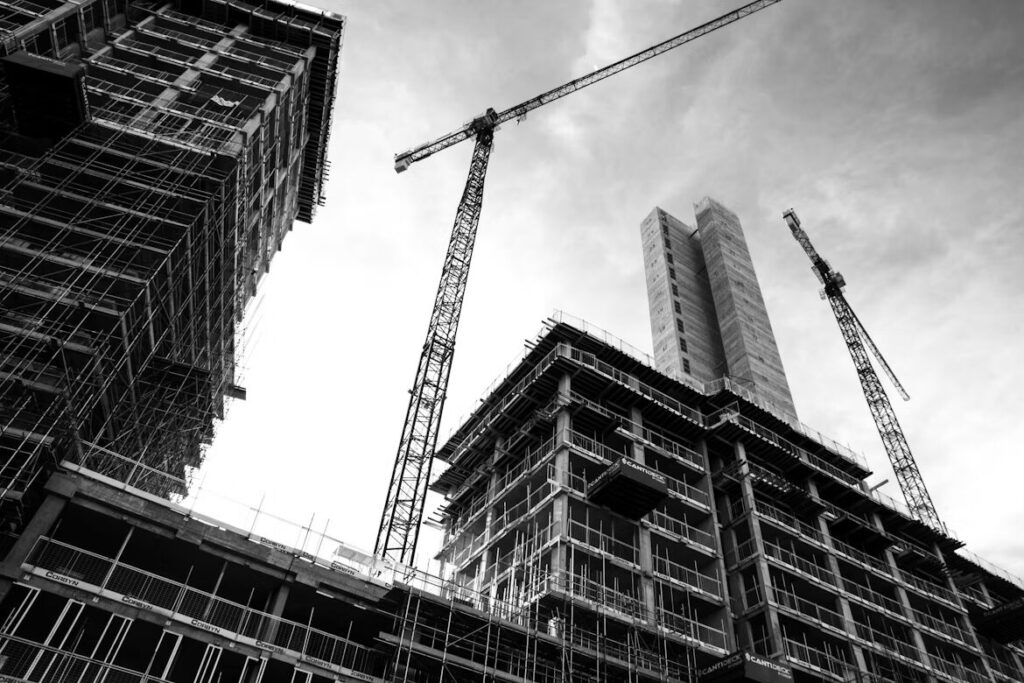
Expressway adjacency further alters commercial dynamics. High-speed vehicular corridors create accelerated visibility windows. A building’s ability to register visually within seconds influences anchor brand negotiations and long-term signage value. In this context, frontage width and architectural prominence become commercial instruments rather than aesthetic choices.
Another determinant of longevity is floor plate adaptability. As hybrid work models reshape corporate requirements, static layouts risk obsolescence. Developments incorporating scalable design allow tenant modification without structural compromise. Flexibility embedded within the grid increases asset durability across economic cycles.
Noida’s current phase of commercial consolidation favors developers who align projects with infrastructural momentum rather than opportunistic land accumulation. Corridor-based economic clustering is redefining how business districts are formed. Projects positioned at infrastructural intersections naturally accumulate sustained visibility and commuter integration.
In evaluating the broader landscape of real estate developers in Noida, strategic specialization emerges as a differentiator. Commercial ecosystems require fluency in tenant lifecycle dynamics and footfall behavior — variables distinct from residential demand cycles.
Within this shifting framework, the operational focus demonstrated in ONE FNG by Group 108 reflects alignment with long-term infrastructural logic. As Noida strengthens its identity as a self-contained business district, commercial projects engineered with structural precision are more likely to retain relevance beyond initial launch cycles.